In the automotive manufacturing sector, choosing a vertical machining center should deeply align with the processing requirements of components, production efficiency, and process complexity. Below are key selection strategies focusing on processing capabilities and precision:
Worktable size and load capacity:
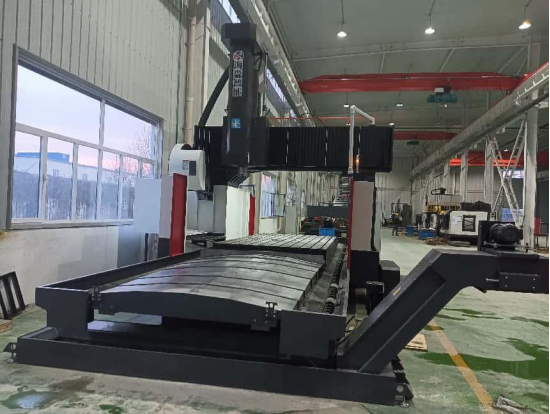
Automotive components, such as engine blocks and transmission housings, are relatively large, requiring a worktable size of at least 2000mm x 1000mm and a load capacity of at least 5 tons. For new components like battery pack pallets in new energy vehicles, the worktable's load capacity and travel range must be considered. Some ultra-large equipment can have a travel range of up to 3000mm x 1500mm to meet multi-station clamping needs.
Key indicators: X-axis travel 1500-2000mm, Y-axis 800-1200mm, Z-axis 600-1000mm, ensuring coverage of long shaft parts (such as drive shafts) and multi-sided processing needs.
Main spindle performance and material compatibility:
Aluminum alloy high-speed cutting: A high-speed spindle (10000-24000r/min) is required, combined with electric spindle technology (direct drive, no transmission gap) to achieve efficient processing of lightweight components. For example, when machining engine cylinder heads, high speed reduces cutting force and prevents thin wall deformation.
Cast iron/high-strength steel heavy cutting: The spindle power should reach 15-30kW, with a torque of at least 100N·m. Gear transmission or direct spindle structure is used to ensure rigidity and stability during rough machining. For hot-formed steel (such as body crash beams), the spindle must have high vibration resistance to prevent tool chipping.
Technical Extension: The HSK tool holder system, known for its high precision and rigidity, is the preferred choice for high-speed machining. It can withstand centrifugal forces and minimize vibrations.
Precision and Stability:
Positioning and Re-positioning Accuracy: Key components, such as cylinder bores and crankshaft journals, require a positioning accuracy of ±0.005-0.01mm and a re-positioning accuracy of ±0.003-0.005mm2. A linear optical scale feedback and temperature compensation system are used to mitigate the impact of thermal deformation on accuracy.
Structural Design: The bed is made from high-quality cast iron or a welded structure optimized by finite element analysis, and undergoes aging treatment to eliminate stress. The guideway system must balance rigidity and speed; for example, ultra-heavy-duty roller linear guides enhance stability during the machining of large workpieces.







 English
 Français
 Español
 بالعربية
 हिंदी
हिंदी Русский язык